

 KOR
KOR
Government Innovation The Best Way to Enhance
Competency in the Public Sector
The Korean Government will accredit the "Firsts" of our innovations that contributed to the public's comfort and safety, and select the "Best" cases of government innovation to spread as examples to our many institutions.
Government Innovation
The First
-
- Medicine Envelopes Displaying Medication Information and Dosage Instructions
- Seoul City
- 2013
-
Medicine Envelopes Displaying Medication Information and Dosage Instructions (hereafter referred to as Medicine Information Envelopes) are a project to aid patients through medicine consumption guides by displaying detailed information regarding pharmaceuticals on prescribed medicine envelopes. Medicine envelopes that double as medicine guides have developed through voluntary efforts since 2000. However, in 2012, Seoul City transformed a citizen’s proposal into a policy item, giving birth to the current medicine envelope.
The Medicine Information Envelope, completed through Seoul City’s institutionalization initiative, has become a solid partner that protects the health of patients.
Content
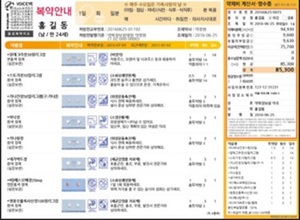
Medicine Envelopes with Consumption Guides ⓒ Korea Medical Information Service√ Introduction
■ A Transformation for Medicine Envelopes. Don’t Forget Your Medication Guidance
Any Korean has experience purchasing medicine with a prescription from their doctor. In the past, the medicine envelopes simply had patient names and consumption instructions. Now, envelopes have detailed descriptions of not just the prescribed patient’s name, but also the pharmaceutical ingredients of the medicine, precise consumption methods, and any possible side effects, with pharmacists providing a clear verbal explanation of the details. What brought on this transformation for medicine envelopes?
Article 24, Paragraph 4 of the Pharmaceutical Affairs Act specifies that “where a pharmacist dispenses drugs to a patient, he or she shall give the patient or his or her protector necessary oral or written medication counselling in which a direction for taking medicines (referring to a written direction or electronic document explaining the details of medication counselling in terminologies readily comprehended by the patient) is written.” In accordance with this provision, medicine envelopes have been utilized as a means to guide medicine consumption using photographs, descriptions, consumption instructions, and benefits etc.
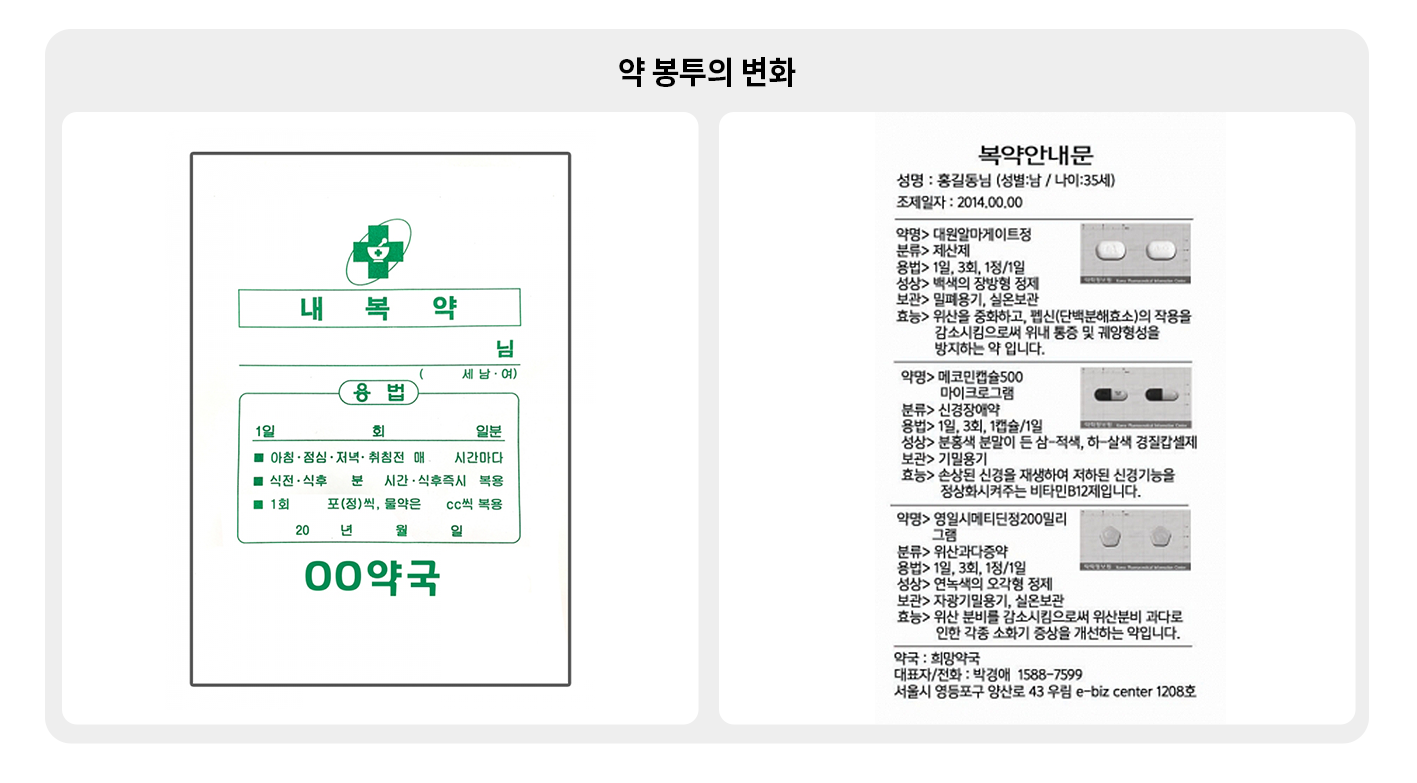
The Transformation of the Medicine Envelope ⓒ Korean Pharmaceutical Association (KPA)
■ The Shining Idea of a Seoul Citizen, Established as a Public PolicyWhen medical prescriptions and medicine envelopes only had patient names, daily dosages amounts, and dosage times, several patients were often confused and reluctant to take medication. As consumption instructions were only provided verbally, senior citizens or patients with multiple prescribed medications were prone to take wrong dosages.The first person to push the idea of upgrading medicine envelopes into action was Jeong Hoon Park, a pharmacist and member of the Ulsan Metropolitan City branch of the Korean Pharmaceutical Association(KPA). Since 2002, he had voluntarily printed simple explanations for patients’ conditions and instructions for the medicine on their medicine envelopes, effectively becoming the origin of the new Medicine Information Envelopes.In 2009, pharmacy receipts and medicine consumption guides were printed together with the Cresoty Co. “Pharmpay” Terminal. Later on in May 2012, a suggestion to have “pharmaceutical substances printed on prescription medicine packaging” was also registered on Korea’s “e-People” portal. Evidently, the new medicine envelopes experienced one change after another through the efforts of various individuals, but came in different shapes and forms according to their producer due to no clear guidelines.In 2012, Seoul City, in an effort to support changing medicine envelopes with public initiative, began the “Medication Guidance Promotion Project.” Inspired by a proposal for “Displaying Medication Information and Dosage Instructions on Medicine Envelopes” by Mr. Nam, Sangwoo, which won Best Policy (First Place) at the Seoul Creativity Awards’ Best Citizen Proposal, the initiative was officially placed into action. Medicine envelopes, which had experienced countless changes for a long time, finally began to expand nationwide through Seoul City’s institutionalization processes.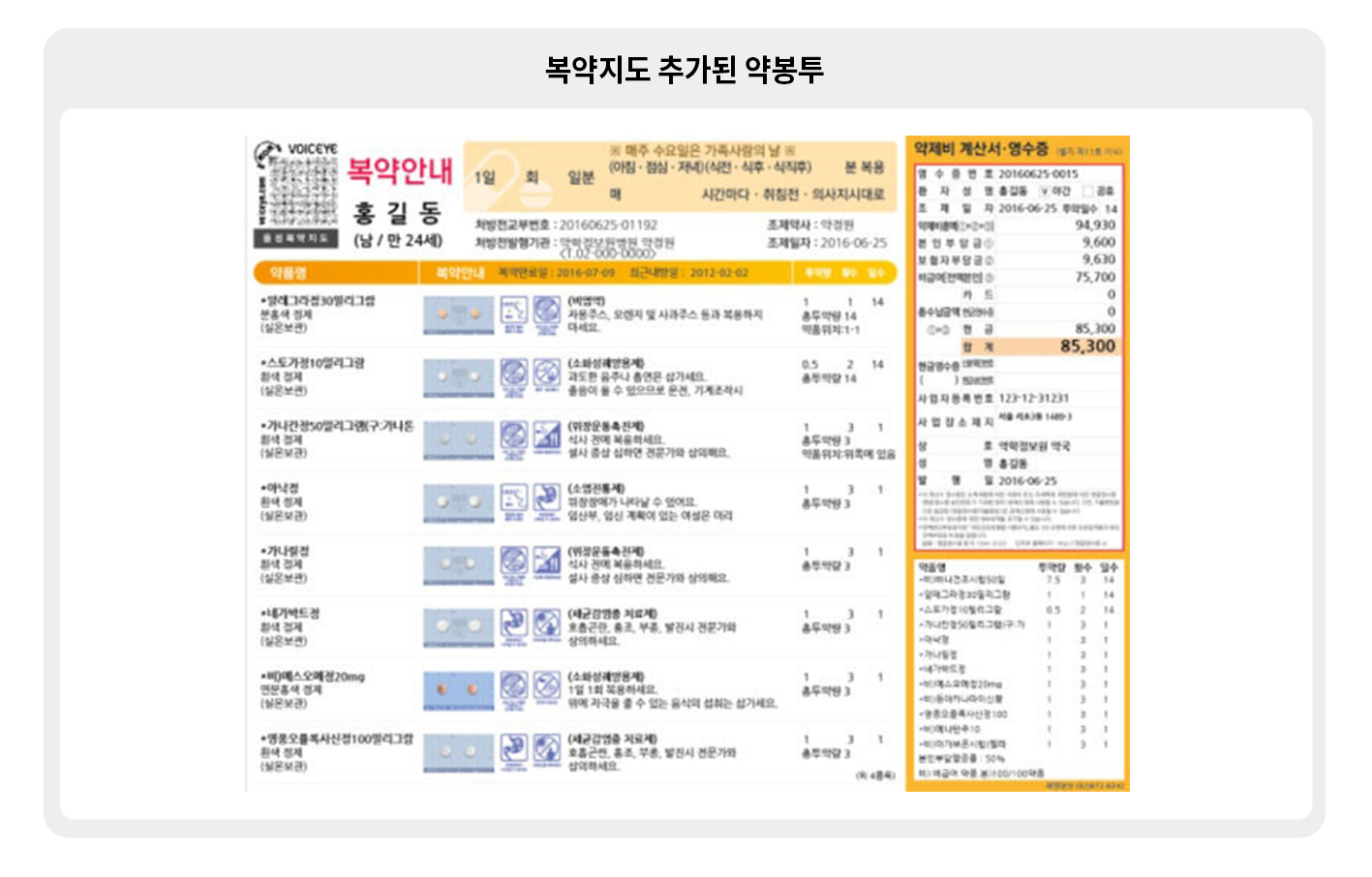
Medicine Envelopes with Added Medicine Consumption Guidance ⓒ Korea Medical Information Service■ A Friendly Change to Medicine Envelopes, Leading to Informed Citizens and Better Public Health
The “Medicine Information Envelope” initiative that first began with a citizen’s proposal in 2012, led to an establishment of the “Plan to Implement Enhanced Medicine Consumption Guidance and Prescribed Medicine Information for Improved Pharmacy Patient Service” beginning in July 2012, with an official request for cooperation also sent to the Seoul City Branch of the KPA.
In June 2013, institutions like the Seoul Metropolitan Seobu Hospital and Seoul Metropolitan Eunpyeong Hospital launched a pilot program for displaying medicinal information and consumption instructions on medicine envelopes. Meanwhile, in April 2013, a petition was made to the Ministry of Health and Welfare(MOHW) to request an amendment to the existing legislature so that consumption instructions would be displayed on the backside of prescriptions. Through such efforts, on June 19th 2014, an amendment to the Pharmaceutical Affairs Act was implemented to reflect a mandate for oral or written “medication directions.”
The new medicine envelopes include various pieces of information, including not just patient and consumption information, but also prescription numbers, clinic information, dispensing date, medicine name, consumption directions, and warnings. The envelopes also include receipts for medicine preparation, allowing more convenient insurance claims for reimbursing medicine costs.
This policy to display medicinal information and consumption methods on medicine envelopes has been met with praise for enhancing citizens’ right to information and contributing to better health systems.
■ The Hidden Functions of Medicine Envelopes, Keeping the Public Healthy
As easy as it is to miss, medicine envelopes have many hidden functions. This includes various promotional campaigns, advertisements, braille utilization, QR codes, and audio medicine guides, etc. to help out with each respective situation.
In 2015, the Ministry of Gender Equality and Family(MOGEF) and the KPA conducted a “Family Appreciation Day” campaign, in order to promote the practice of ending work on time each Wednesday and spending more time with family.
In 2018, the City of Busan initiated a pilot run of their “Braille Medicinal Guidance Program for the Visually Impaired” to assist the visually impaired with medicine consumption. Participating pharmacies provided medicine consumption guidance by attaching a sticker with braille and raised marks that expressed dosage times and consumption orders.
In 2019, the KPA provided medicine envelopes that allowed patients with limited access to printed materials to receive audio guidance for medicine consumption. A scan of the “Voiceye Code” printed on medicine envelopes allowed patients to listen to an audio version of medicine and consumption guidance information.
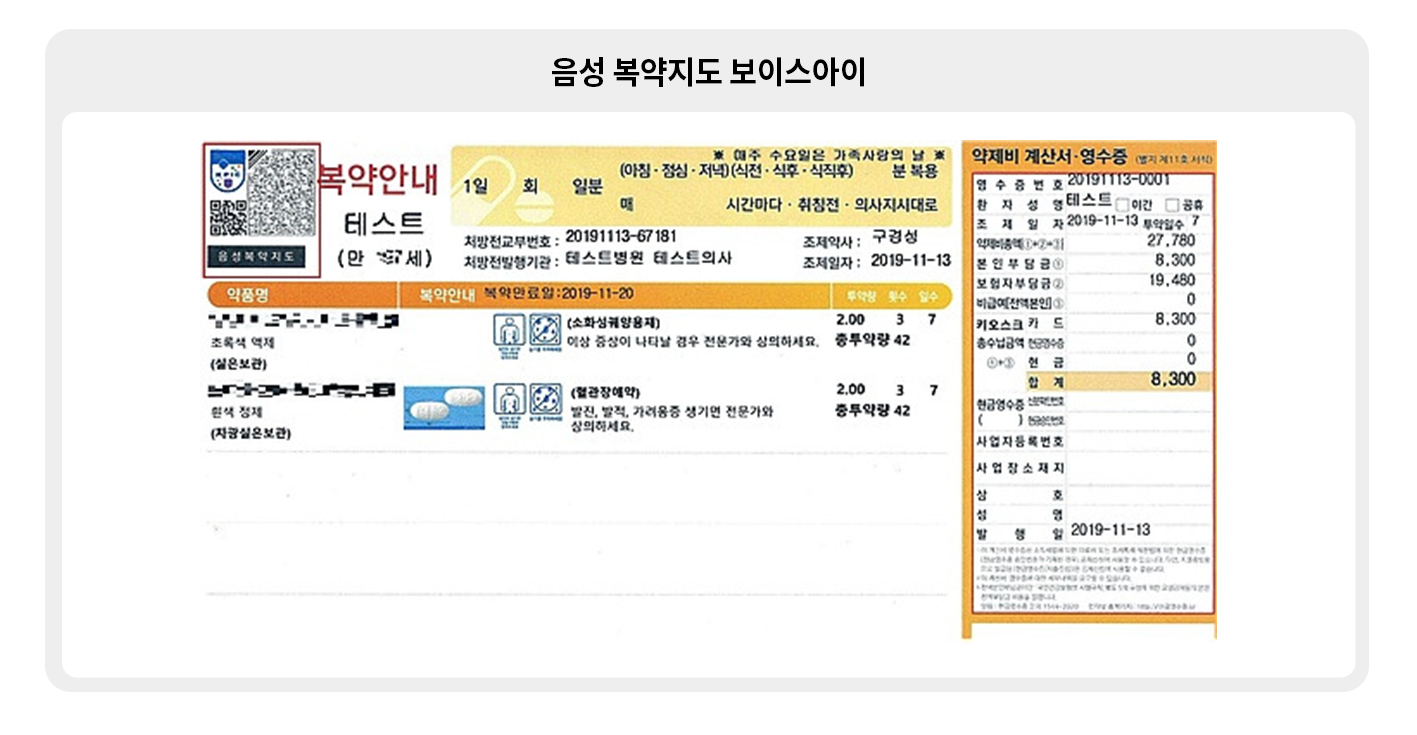
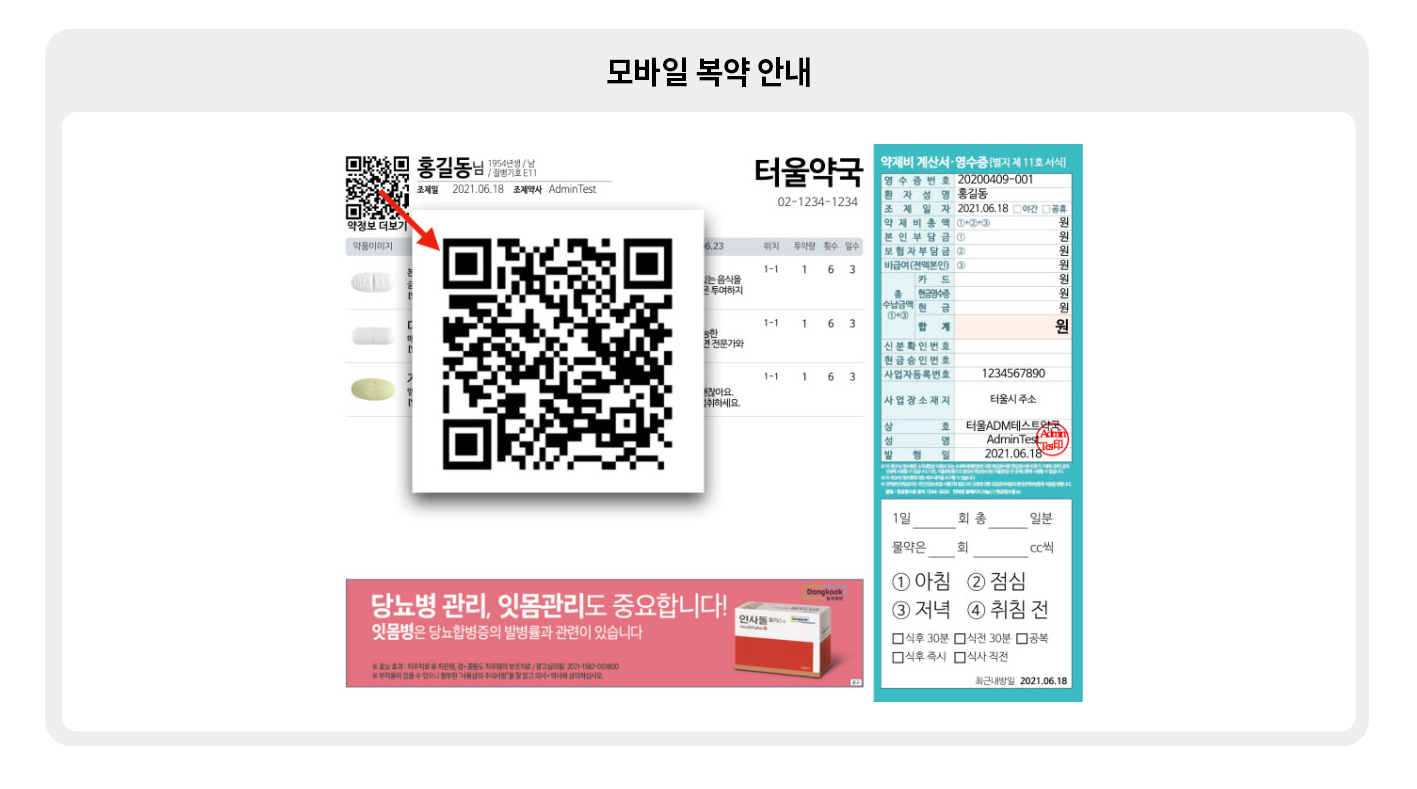
Voiceye Audio Guidance for Medicinal Consumption Guidance ⓒ The Korean Pharmaceutical AssociationPatients can also check medicine consumption information on their phones. Now, a scan of the QR code on medicine envelopes allows patients to confirm, store, and manage consumption information, allowing them to safely check consumption guides and also store the medicinal contents.
Mobile Medicine Consumption Instructions ⓒ PillCheckBeginning in 2023,The Patient Safety Pharmaceutical Management Center of the KPA conducted a promotional campaign, “Let Us Know. More Participation, More Safety.” This campaign implemented personal information,medicine confirmation, DUR (Drug Utilization Review) system checks, and side effect/allergy checks, etc. to be printed on medicine envelopes so that pharmacists can reconfirm such disclosed details during medicinal guidance and prevent patient safety incidents. The campaign has gained praise for not only improving patient health management, but also contributing to trust between pharmacists and patients.
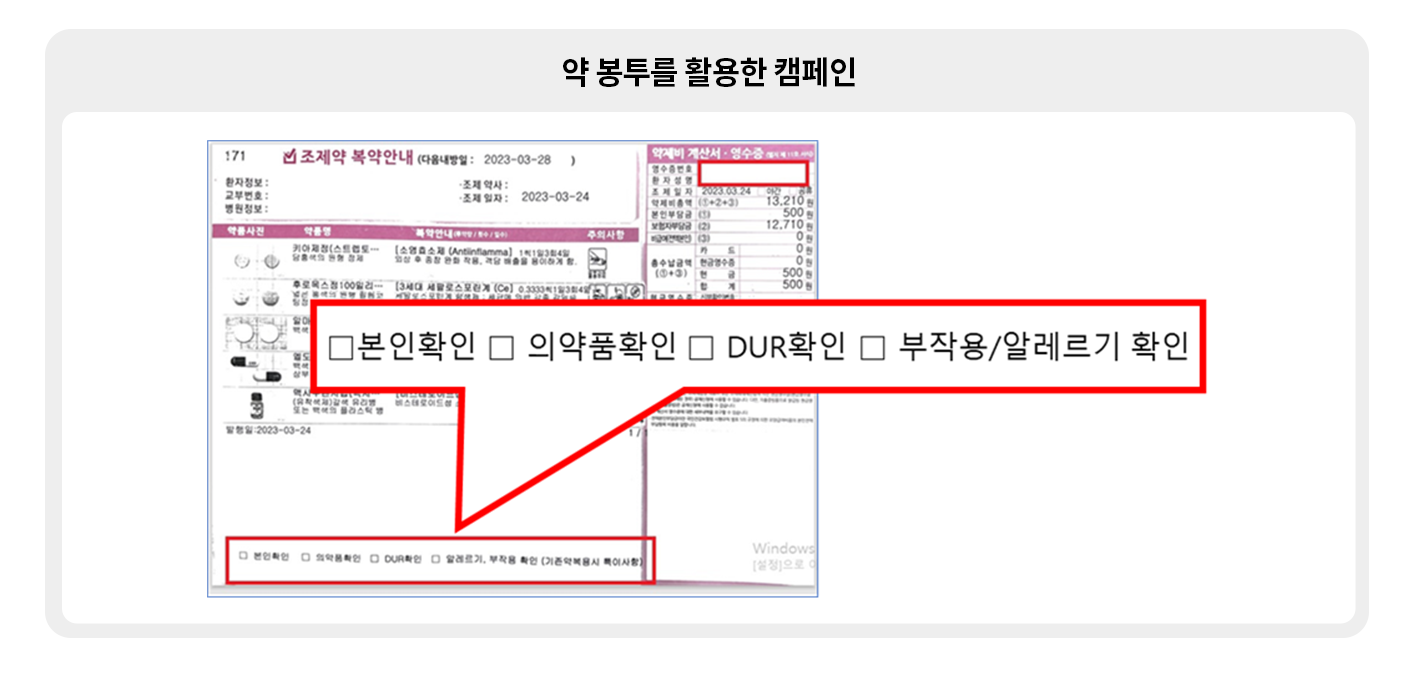
Promotional Campaigns Utilizing Medicine Envelopes ⓒ Korean Pharmaceutical AssociationThe Medicine Information Envelope continues to evolve to this day. The patient-friendly medicine envelope was completed through the ideation and efforts of various individuals. Rather than throwing away medicine envelopes from pharmacies, take a moment to experience the various benefits from the information they hold, and take charge of your health!