

 KOR
KOR
Government Innovation The Best Way to Enhance
Competency in the Public Sector
The Korean Government will accredit the "Firsts" of our innovations that contributed to the public's comfort and safety, and select the "Best" cases of government innovation to spread as examples to our many institutions.
Government Innovation
The First
-
- Public Funeral Service
- Shinan-Gun, South Jeolla Province
- May 2007
-
Government-subsidized Public Funerals(hereafter referred to as Public Funerals) are a public service that ensures dignity for the deceased by assisting unclaimed persons or citizens who are unable to hold proper funeral rituals due to financial difficulties.
Beginning in 2007 at Shinan-gun, South Jeolla Province, the policy has since been implemented further by many municipalities and public institutions, operated with sincerity to provide a warm farewell for the deceased.
Content
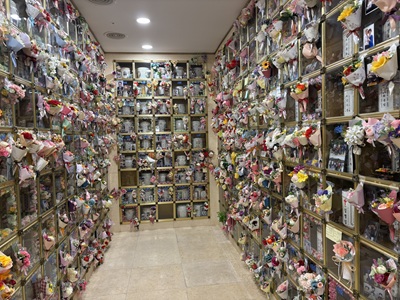
The Shinan 1004 Memorial Hall ⓒ Shinan-Gun
√ Introduction
■ Growing Concerns Over Funerals Due to the Rise of Single-person Households
According to the “Household Projections for 2022-2052” report released in September, 2024, by Statistics Korea(KOSTAT), Korea’s primary government organization that manages national statistics, Korea is experiencing a yearly increasing trend in single-person households. In 2022, single-person households accounted for 7.39 million (34.1%) out of all households, but the number is expected to greatly increase to 9.62 million (41.3%) households by 2052. With this ongoing rise in single-person households and a continuing trend of population aging in Korea, concerns over funeral procedures have also grown.
The Public Funeral program supports all funeral expenses and arrangements for individuals who are unable to hold proper funerals due to severed family ties or financial difficulties.The public sector ensures that the deceased are guaranteed a proper funeral by directly providing funeral services to the unclaimed deceased or low-income households, or by assisting them to carry out ceremonies. Through such support, the deceased can maintain a level of human dignity, while bereaved family members and friends are permitted time to mourn the deceased.
Unclaimed deceased persons and disadvantaged groups* are the target beneficiaries of this policy. Elements of support include funeral supplies, funeral venue rental, labor costs, alongside cremation and enshrinement costs, while supporting budgets slightly differ among different municipalities.
* Recipients of funeral benefits under the “National Basic Living Security Act,” whose next of kin are unable to hold funerals due to being underaged, possessing severe disabilities, or being senior citizens( older than 75 years of age) etc.
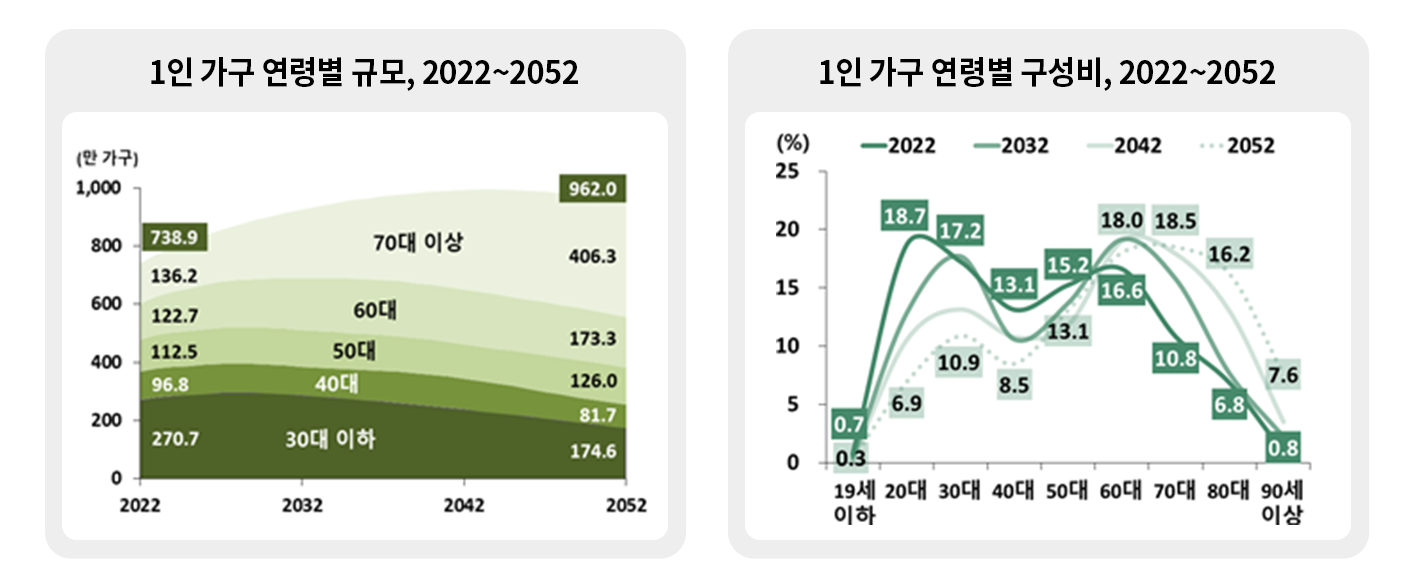
Numbers and Propotions for Single-person households ⓒ KOSTAT■ Ensuring that No One Faces Their Final Journey Alone!Public Funerals were first implemented in Shinan-gun,South Jeolla Province in 2007. Shinan-gun, consisting of 72 residential islands, had no funeral halls at the time. With a rising population of senior citizens living alone and low-income households, the caring residents of island villages had growing concerns over their neighbors’ funeral arrangements.In order to tackle this concern, the Shinan-gun office enacted Korea’s first “Ordinance for Public Funeral Support” in May 2007 to support Public Funerals at a public policy level. Later on, a budget of 200 million Won was allocated to establish a comprehensive funeral support system, pioneering an advanced “cradle-to-grave” comprehensive welfare plan that had only existed in textbooks.Since the first Public Funeral, the Shinan-gun office took responsibility for all procedures and costs required for funerals of the unclaimed deceased, including funeral supplies, transportation, and cremation. At implementation, citizens registered as residents of Shinan-gun who had no dependents, were classified as low-income, were married couples who both possessed disabilities, or were part of single-parent households where the head of the household had passed away, etc. were the main beneficiaries. This applied to over 150 households out of the total 21,297 households in Shinan-gun.The Public Funerals of Shinan-gun have been praised as a meaningful welfare program that granted dignity to the low-income and unclaimed deceased, who were otherwise neglected or unprotected by the public.■ Fostering a Spirit of Mutual Help and Bringing Social Welfare Values to Life
Through 7 partial ordinance amendments from 2007 to 2021, Shinan-gun’s Public Funeral program has raised a sense of community while bringing social welfare values to life. An overview of support cases in the last 5 years show that a total monetary value of 163.7 million won was supported for 187 individuals.
The Public Funeral support program has provided residents with tangible resources, thus protecting their dignity and raising resident welfare. Furthermore, by providing subsidies for cremation and supporting funerals, the policy has led to an improved perception of traditional funeral rites while allowing more efficient utilization of land in Korea. Above all else, the support program has fostered a spirit of mutual help among citizens and has enhanced unity within the local community.
The largest accomplishment of the Public Funeral service is the establishment of a new model of funeral culture. Most funeral rites in Korea had either followed long lasting traditions or had applied national welfare programs originating from developed nations. However, this new Public Funeral program in Korea could be regarded as a funeral culture system that was self-discovered by local residents, in tune with the changing times.
The Public Funeral system, first implemented in Shinan-gun to protect human dignity for the deceased, now goes beyond being just the first of its kind in Korea, with even praise from around the world as a meaningful government program.
■ The Ministry of Health and Welfare’s Standard Guidelines for Public Funerals, Paving the Way for a Dignified End of Life
As of April 2025, 15 metropolitan governments and 217 basic municipal governments supported Public Funerals. Seoul City, the first metropolitan government to implement the program, first doing so in 2018, has conducted 3,744 cases of Public Funerals over the last 3 years, and operates a Public Funeral support consultation center.
Suwon City, in Gyeonggi Province, was the first to introduce Public Funerals in cooperation with religious organizations. A cooperative agreement was signed with the Suwon Christian Council, the Suwon Buddhist Association, the Catholic Diocese of Suwon, and the Won Buddhism Gyeonggi-Incheon District to conduct memorial ceremonies pertaining to the religious faith of the deceased. For any deceased without a religious affiliation, each religious group takes turns on a quarterly basis conducting memorial ceremonies.In Hwaseong City, also in Gyeonggi Province, memorial services are conducted with volunteer participation from current students and graduates of the Hyupsung University Funeral Director School, located in the city. In addition, Anyang City has formed a community-led service organization called “Remember” that specializes in Public Funerals, and its members fulfill the funeral duties of relatives for the deceased.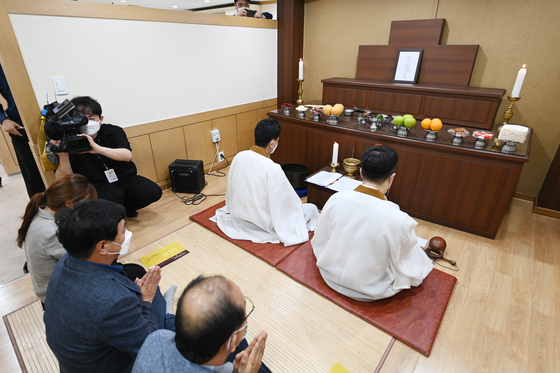
Public Funerals, in Cooperation with Religious Organizations ⓒ Suwon City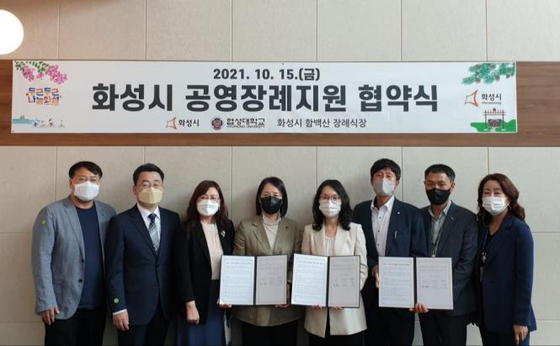
Signing of MOU for Hwaseong City Public Funeral Service ⓒ Yonhap News AgencyIn February 2024, the Ministry of Health and Welfare(MOHW) established a “Standard Ordinance for Public Funeral Implementation” for each municipal government office in order to enhance the quality of Public Funeral services at each level of regional government. Regional governments without related ordinances were prompted to establish a legal basis to implement Public Funerals. Municipal governments with existing ordinances were guided to refer to the Standard Ordinance framework to refine and amend existing components, and thus reduce regional disparities in Public Funeral services. In addition, The MOHW plans to provide budget allocation reports for each municipal government so that regional governments without an established budget can reference existing Public Funeral budget levels and establish their own additional budgets for the year.